
My recent visit into spiritual darkness
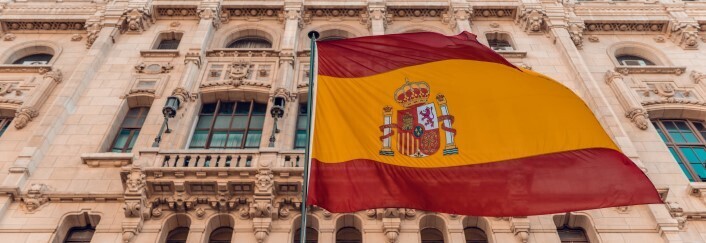
I recently visited the Castros and Yingers, Fellowship International missionaries serving in Spain.
My visit was a reminder why we must continue to send missions personnel to Europe, including Spain.
Introducing the Castros and Yingers
Ken and Cathy Yinger have been befriending and seeking to win Spaniards in Jerez (pronounced “hair-reth”) de los Caballeros (meaning “knights”), a Templar town of 9,000, for the past nine years.
Ricardo and Ingrid Castro have been establishing Discovery Bible Studies first in Zafra (population 12,000) and recently they moved to the large urban centre of Seville in the Andalusia region.
The towns both couples serve in are located in the Extremadura (meaning “very hard”) region. Like everywhere in Spain, this region is stony ground. It’s “very hard” to reach Spaniards for Christ. It is a very Gospel-averse culture. Over 95% of Spaniards claim to be atheists, however there is still an unusually strong connection with the symbols associated with their Roman Catholic heritage. A kind of medieval Catholicism.
In the midst of this stony ground, the Yingers and Castros have developed hundreds of relationships. Their creativity in connecting with people, especially people of peace, is inspiring. Discovery Bible Studies have been established in several towns and now in the city of Seville. They have witnessed about a dozen baptisms, including Salva’s. I witnessed Salva’s baptism when visiting in 2016 and what a joy it was to visit him again—with his new wife—during my recent visit. He has become completely blind in recent years but remains strong in the Lord and is developing an online evangelistic ministry. Thank you, Lord, for Salva.
The Holy Week Processionals
I intentionally chose to visit our mission personnel during Holy Week and Easter weekend to witness firsthand the processionals that every town and city host daily during the week before Easter. I witnessed seven processions in Grenada, Jerez de los Caballeros, and Seville.
My first impression of these parades was a feeling of sadness. There seems to be a fatalism inherent in the processions — some parades lasting one hour while others last twelve hours. Sorrow is what the processions seek to portray, rather than the joy and celebration of Christ’s resurrection. Band members playing sombre music and “Nazarenos” wearing cone-shaped hoods walk slowly, some in bare feet, carrying lit candles or large crossbeams while dragging chains attached to their ankles. It looks a wee bit creepy.
Then a large gilded float with the crucified Christ aloft is slowly carried by dozens of young men, stopping periodically for rest breaks. Finally, at the end of the parade a float with a statue of Mary, who is sorrowful over her Son’s death, is met by people on the street reaching out to touch the float and genuflect. The “Virgin” is clearly the belle of this ball, the protagonist of this parade, not Jesus. Christ is the weak character within the drama acted out on the streets of every Spanish town and city during Holy Week.
I carefully watched the procession participants. Many were quiet and respectful, but mostly they were there to see the spectacle put on by the “Brotherhoods” each year. Each town has one or more Brotherhoods, not connected to the church, who raise funds and prepare for their Holy Week processional each year. You can sense the competition between Brotherhoods seeking to put on the best parade each Holy Week season.
Spaniards flock to their processional to see the spectacle, but just as important is the need to be seen. To not go to the town’s processional(s) is viewed as not being Spanish which can possibly result in losing face. This is an honour-shame culture with a seismic need to be respected. You observe the processions and you donate funds to the Brotherhoods who put on the processions, even though you don’t believe in any of the dogma or symbolism. This is quite extraordinary when one is reminded that the vast majority of Spaniards are atheists. The processions are cultural anchors within a postmodern-medieval society.
In the end it left me with feelings of sadness and confusion that well-educated atheists place so much importance, even veneration, on these annual cultural-religious observances. It felt like the circus had come to town.
The lasting impression was the need to call more faithful Fellowship family members to get involved in cross-cultural ministry in Spain and Europe. The spiritual darkness is vast, dense, and murky.
Is God calling you, a friend, or a church member to overseas ministry? Talk to us.